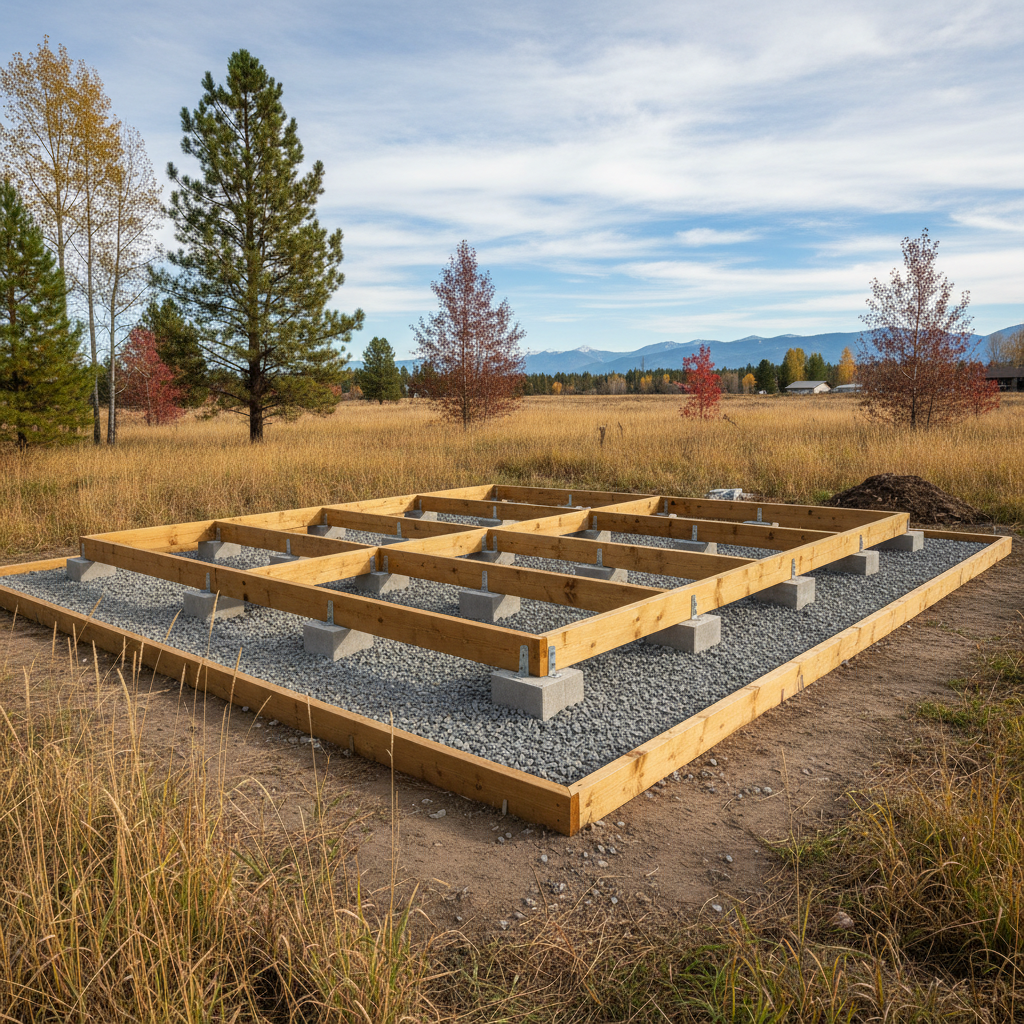
You're probably pretty excited about that new shed, right? Maybe it's for storage, or a workshop, or even a quiet office space. That's fantastic! But before you start picturing your tools all neatly organized or your desk looking out over the Flathead Valley, we need to chat about what's underneath it all: the foundation. I've been building sheds and garages here in Kalispell for a long time, and I've seen folks make some pretty common — and often expensive — mistakes when it comes to foundation work. Let's get you sorted out so you don't end up regretting anything later.
Mistake #1: Skimping on Site Prep
This is probably the biggest one, honestly. People think, "It's just a shed, how much prep could it possibly need?" A lot, actually. You can't just plop a shed down on uneven ground or a patch of weeds and expect it to last. I've seen sheds settle unevenly within a year because the ground wasn't properly leveled and compacted. Here in Kalispell, especially with our clay soils in some areas, or the sandy loam near the river, you absolutely have to think about drainage. If water sits under your shed, you're practically inviting rot, mold, and all sorts of critters. You need to clear the area, get rid of all organic material (grass, roots, debris), and then level it. Don't just eyeball it, either; use a level and a string line. If you're building on a slope, you'll need to dig out some earth and potentially build up one side, or maybe consider a pier foundation. Skipping this step is like building a house on quicksand – it'll look okay for a bit, but trouble's definitely brewing.
Mistake #2: Underestimating the Foundation Type
Not all shed foundations are created equal, and what works for a small garden shed just won't cut it for a heavy workshop or a two-story storage building. I often see people automatically go for concrete blocks on gravel, which is fine for small, light sheds, but if you're putting anything substantial in there, or if you're planning on a concrete floor, you need something more sturdy. For heavier sheds, a gravel pad with pressure-treated skids is a solid choice, but even then, the depth and compaction of that gravel really matter. For truly heavy-duty applications, or if you want a permanent, rodent-proof floor, a concrete slab is the way to go. I've had customers come to Kalispell Custom Sheds asking for a big, custom workshop, and they're always a bit surprised when I tell them their little 4-inch gravel pad idea just won't be enough. Think about the weight of what you're storing and how much foot traffic it'll get. A riding mower and tools weigh a lot more than a few bags of potting soil, wouldn't you agree?
Mistake #3: Ignoring Local Codes and Permitting
Yeah, I know, permits are a hassle. Nobody loves dealing with bureaucracy. But ignoring them can cause an even bigger headache later on. Depending on the size and type of your shed, and where you live in Flathead County, you might need a building permit. Even if you don't need a full-blown permit, there might be setback requirements from property lines or other structures. I've seen sheds built too close to property lines or without proper drainage, which leads to disputes with neighbors or even fines from the county. Always check with the Kalispell Planning Department or your local county office before you start digging. It's not just about the shed itself; sometimes the foundation work, especially if it involves significant excavation or concrete, can trigger permit requirements. Better safe than sorry, right?
Mistake #4: Forgetting About Drainage and Water Management
This really goes hand-in-hand with site prep, but it's such a critical point it deserves its own mention. Kalispell gets its fair share of rain and snowmelt, and if that water isn't directed away from your shed's foundation, you're just asking for trouble. I've seen sheds with perfectly good foundations start to rot because water was constantly pooling around the base. You need to make sure your foundation is slightly elevated, and that the surrounding ground slopes away from the shed. Adding a gravel perimeter or even a small French drain can make a huge difference. Don't let water sit and soak into your foundation or the ground beneath it. It'll undermine everything you've built and shorten the lifespan of your shed considerably. Think about where the water will go when it rains hard or when the snow melts in the spring. You want it moving away, not pooling up.
Mistake #5: Doing It All Yourself When You Shouldn't
I'm a big believer in DIY when it makes sense. There are plenty of projects you can tackle yourself. But foundation work, especially for a substantial shed, often isn't one of them. It requires precision, heavy lifting, and knowledge of soil conditions, drainage, and structural integrity. I've seen homeowners try to save a buck by doing their own concrete slab, only to end up with a cracked, uneven mess that then needs to be ripped out and redone. That's not saving money; that's spending double. If you're not confident in your ability to level, compact, pour concrete, or properly install piers, hire someone who is. It's an investment in the longevity and stability of your shed. A good foundation is literally the bedrock of your project. Don't cut corners here. Get it right the first time, and your shed will stand strong for decades. That's what we aim for with every project at Kalispell Custom Sheds – building things right, from the ground up.